Industry pressure
Banks and financial institutions need cloud speed without weakening change control, segregation of duties, auditability or resilience.
Any entry point. One autonomous operating model.
Start with any entry point. Expand toward autonomous operations at your pace.
 AWS
AWS
 Azure — including Azure Local sovereign cloud
 Google Cloud
Standardize cloud and infrastructure operations while embedding policy, approvals, auditability, cost controls and operational evidence into every workflow.
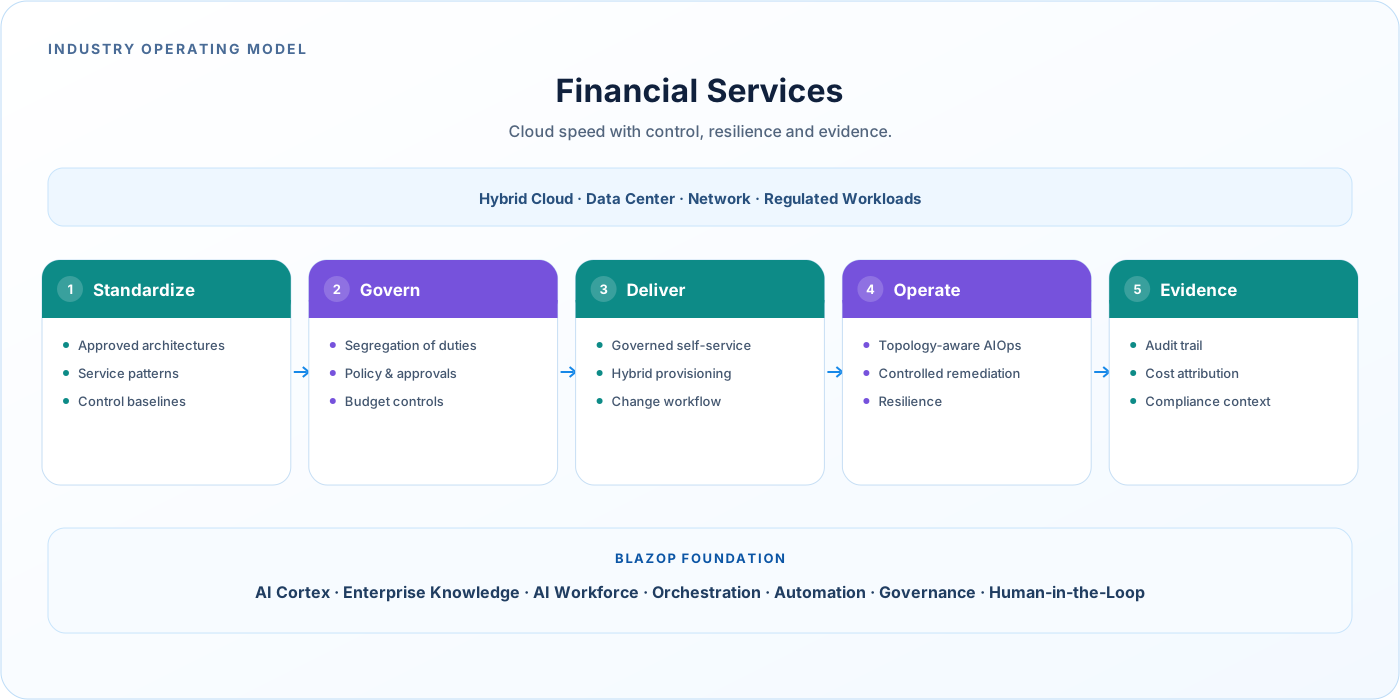
The infographic connects enterprise context, governance, AI reasoning and execution for this specific solution.
Banks and financial institutions need cloud speed without weakening change control, segregation of duties, auditability or resilience.
Use one governed operating model across cloud and data center. Policies and approvals travel with the service; operational actions remain traceable.
AI-led incident reasoning and governed remediation reduce operational toil while preserving human control where risk requires it.
FinOps, inventory and policy enforcement stay connected to the same tenant, application and infrastructure context.
Codifies infrastructure and operational guardrails so changes can be evaluated consistently before execution.
Routes higher-risk actions through the right human approval while allowing low-risk work to continue automatically.
Preserves an execution trail of requests, decisions and actions so teams can review how operational changes were made.
Coordinates policy and lifecycle actions across cloud and on-premises environments from a shared operating model.
Correlates operational signals with context and coordinates governed remediation to shorten repetitive incident work.
Connects usage, ownership and policy so teams can identify waste and take governed optimization actions.
Start with the use case that matters now and expand into one autonomous operating model.
Financial-services teams commonly map operational controls to frameworks and obligations such as DORA, PCI DSS, SOX, GDPR and regional resilience requirements. blaZop can automate approved infrastructure and operations controls, evidence and workflows; using the platform does not by itself establish compliance.
blaZop applies an AI-native autonomous operations model to governed autonomy for regulated, always-on infrastructure. infrastructure, combining enterprise context, governance, orchestration and automation across the service lifecycle.
No. Teams can keep approvals and policy boundaries for higher-risk actions while allowing repeatable, lower-risk workflows to progress through conditional or autonomous execution.
Organizations can start with a focused operating problem such as cloud self-service, incident operations, cost optimization, platform engineering, service fulfillment or AI infrastructure and expand on the same platform foundation.