Industry pressure
Clinical, laboratory and research workloads combine high availability expectations with sensitive data, fragmented estates and growing AI demand.
Any entry point. One autonomous operating model.
Start with any entry point. Expand toward autonomous operations at your pace.
 AWS
AWS
 Azure — including Azure Local sovereign cloud
 Google Cloud
Connect clinical and research infrastructure to governed self-service, topology-aware operations, automation and cost controls across cloud, data center and AI environments.
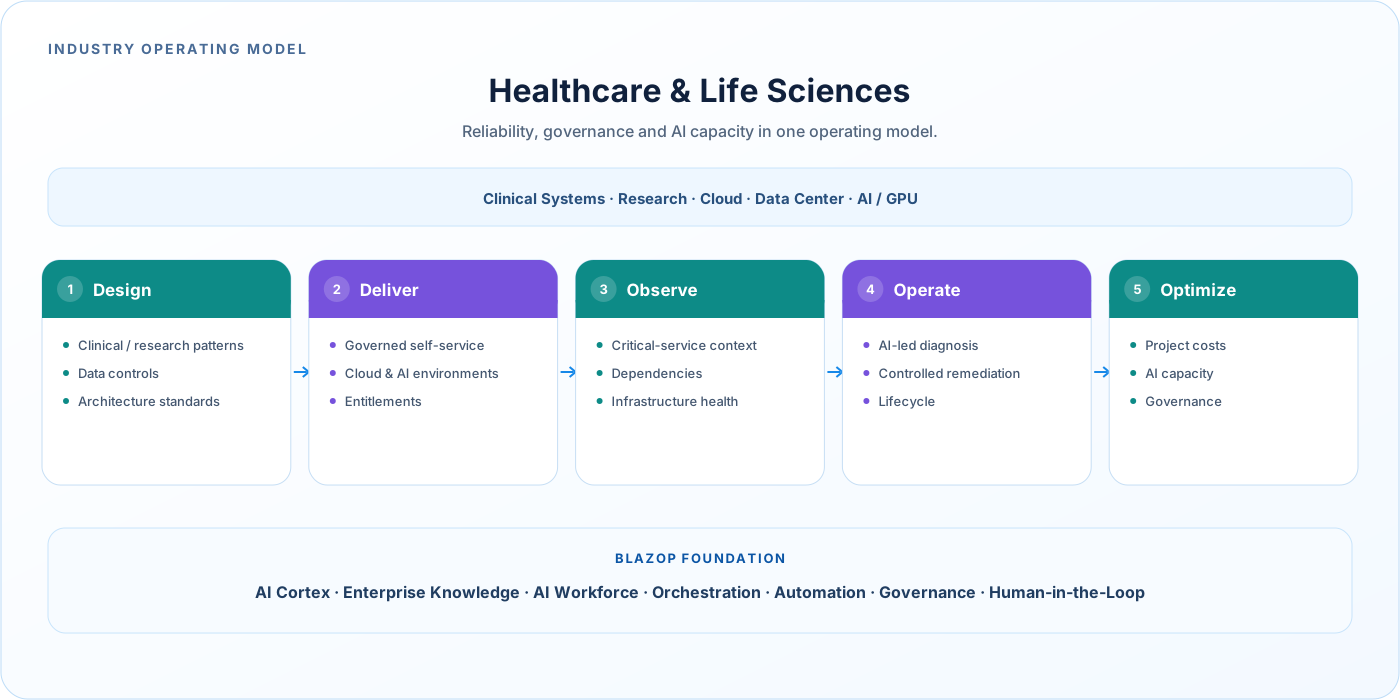
The infographic connects enterprise context, governance, AI reasoning and execution for this specific solution.
Clinical, laboratory and research workloads combine high availability expectations with sensitive data, fragmented estates and growing AI demand.
Standardize infrastructure services while keeping policy, data-location requirements and operational controls attached to the workload.
Topology-aware AIOps helps teams correlate symptoms across infrastructure and coordinate governed remediation.
AI infrastructure lifecycle and FinOps give research teams faster access to capacity without losing quota, cost and governance controls.
Uses operational context and governed workflows to help teams maintain critical services while infrastructure changes underneath them.
Gives authorized users a catalog-driven path to request approved services without bypassing policy, approvals or lifecycle controls.
Maps service and infrastructure relationships so operational decisions can account for dependencies and potential impact.
Coordinates the lifecycle of AI and GPU infrastructure with the same policy, orchestration and operational controls used across the wider estate.
Connects usage, ownership and policy so teams can identify waste and take governed optimization actions.
Preserves an execution trail of requests, decisions and actions so teams can review how operational changes were made.
Start with the use case that matters now and expand into one autonomous operating model.
Healthcare and life-sciences environments may need to operationalize requirements such as HIPAA, GDPR and regional data-residency rules. blaZop can enforce approved workflows, access boundaries and audit trails; compliance depends on each organization’s architecture, configuration and controls.
blaZop applies an AI-native autonomous operations model to keep critical digital services available while infrastructure changes underneath them. infrastructure, combining enterprise context, governance, orchestration and automation across the service lifecycle.
No. Teams can keep approvals and policy boundaries for higher-risk actions while allowing repeatable, lower-risk workflows to progress through conditional or autonomous execution.
Organizations can start with a focused operating problem such as cloud self-service, incident operations, cost optimization, platform engineering, service fulfillment or AI infrastructure and expand on the same platform foundation.