Industry pressure
Retail infrastructure must absorb seasonal peaks and digital traffic while controlling cost across cloud, stores and distributed systems.
Any entry point. One autonomous operating model.
Start with any entry point. Expand toward autonomous operations at your pace.
 AWS
AWS
 Azure — including Azure Local sovereign cloud
 Google Cloud
Connect elastic infrastructure, store and edge environments to governed provisioning, autonomous operations and continuous cost optimization.
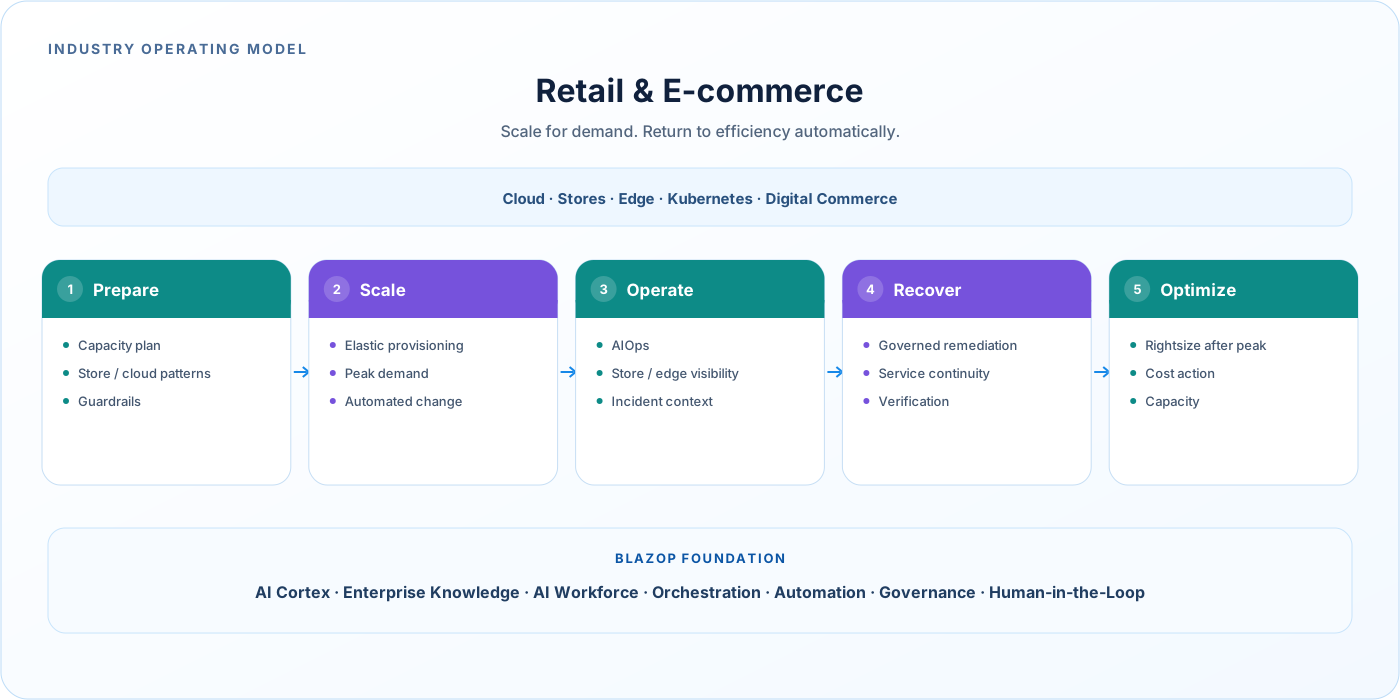
The infographic connects enterprise context, governance, AI reasoning and execution for this specific solution.
Retail infrastructure must absorb seasonal peaks and digital traffic while controlling cost across cloud, stores and distributed systems.
Use standard services and policy-driven automation to scale infrastructure consistently across environments.
AIOps correlates incidents across application-supporting infrastructure and can trigger approved remediation workflows.
Closed-loop FinOps identifies idle or oversized capacity and can execute governed optimization after demand subsides.
Scales approved infrastructure services with demand while keeping provisioning inside defined policies and service patterns.
Coordinates operational actions during demand spikes so teams can scale capacity and return to normal operating levels safely.
Correlates operational signals with context and coordinates governed remediation to shorten repetitive incident work.
Connects usage, ownership and policy so teams can identify waste and take governed optimization actions.
Brings distributed edge and site infrastructure into a common operational view for faster detection and coordinated action.
Applies policy, approvals and execution controls to automation so teams can increase autonomy without removing oversight.
Start with the use case that matters now and expand into one autonomous operating model.
Retail and ecommerce environments may need to account for PCI DSS, privacy obligations such as GDPR, and regional data-residency requirements. blaZop can help standardize infrastructure controls and auditable workflows without replacing the organization’s compliance program.
blaZop applies an AI-native autonomous operations model to scale for demand. automate the return to efficiency when demand passes. infrastructure, combining enterprise context, governance, orchestration and automation across the service lifecycle.
No. Teams can keep approvals and policy boundaries for higher-risk actions while allowing repeatable, lower-risk workflows to progress through conditional or autonomous execution.
Organizations can start with a focused operating problem such as cloud self-service, incident operations, cost optimization, platform engineering, service fulfillment or AI infrastructure and expand on the same platform foundation.