The challenge
Cloud estates grow faster than operating models. Teams inherit different portals, policies, scripts, workflows and Day-2 processes for every environment.
Any entry point. One autonomous operating model.
Start with any entry point. Expand toward autonomous operations at your pace.
 AWS
AWS
 Azure — including Azure Local sovereign cloud
 Google Cloud
Standardize how teams discover, request, provision, govern, operate and optimize infrastructure across public cloud, private cloud, Kubernetes, data center and edge.
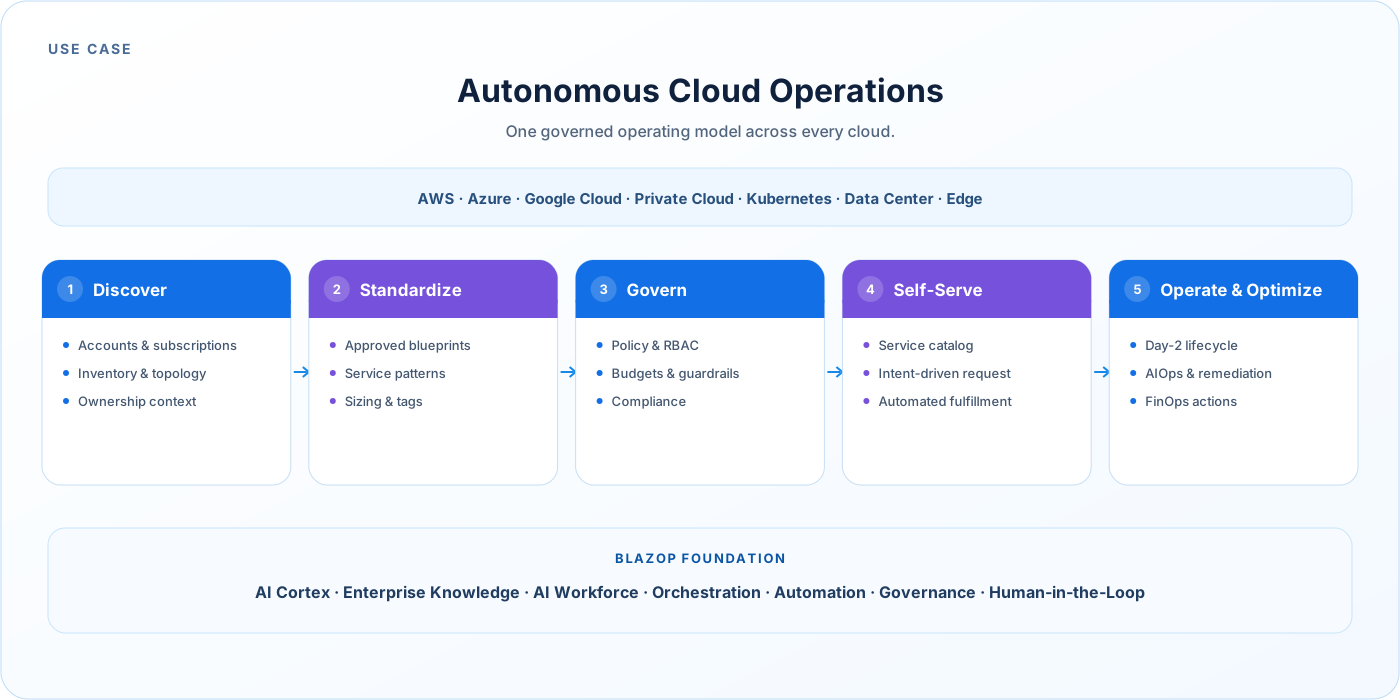
The infographic connects enterprise context, governance, AI reasoning and execution for this specific solution.
Cloud estates grow faster than operating models. Teams inherit different portals, policies, scripts, workflows and Day-2 processes for every environment.
Create one governed service and operations layer across heterogeneous infrastructure. Standard offerings, policy guardrails, orchestration and lifecycle operations stay consistent even when the underlying platforms differ.
Infrastructure moves from cloud-specific tickets and manual handoffs to reusable services, governed self-service and automated Day-2 operations.
CCoE, cloud platform, infrastructure engineering and operations teams can share the same operating model without forcing a single infrastructure vendor.
Maintains current infrastructure context so automation and operations can act on the right assets, owners and lifecycle state.
Packages approved infrastructure capabilities as repeatable service offerings with policy, entitlement and fulfillment attached.
Applies defined guardrails before and during execution so automation stays inside approved operational boundaries.
Coordinates workflows across infrastructure and operational systems so multi-step services can execute as one governed process.
Automates approved Day-2 actions such as change, maintenance, scaling and retirement while preserving policy and lifecycle context across environments.
Connects usage, ownership and policy so teams can identify waste and take governed optimization actions.
Start with the use case that matters now and expand into one autonomous operating model.
Operate every cloud through one governed model. is a blaZop use case that applies AI reasoning, orchestration, automation and governance to move from an operational need or signal to a verified outcome.
A standalone script executes a predefined task. The blaZop operating model adds context, policy, approvals where needed, cross-system orchestration and outcome verification around the automation.
Yes. The autonomy model supports recommendation and human-approved action before teams choose conditional or fully autonomous execution for workflows that meet their risk and policy requirements.