The challenge
Operations teams spend too much time filtering noise, assembling context and coordinating fixes across tools.
Any entry point. One autonomous operating model.
Start with any entry point. Expand toward autonomous operations at your pace.
 AWS
AWS
 Azure — including Azure Local sovereign cloud
 Google Cloud
Correlate signals, understand topology and change context, identify likely cause, recommend or execute governed remediation, verify recovery and learn from the result.
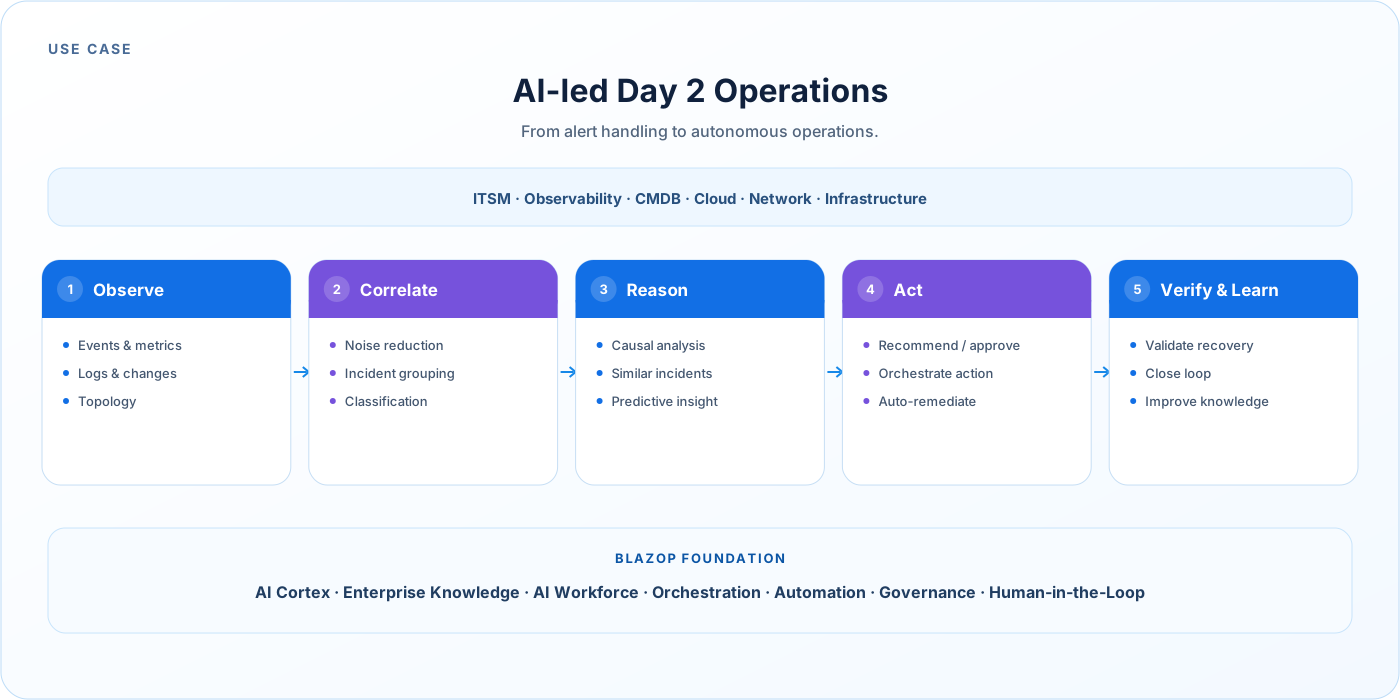
The infographic connects enterprise context, governance, AI reasoning and execution for this specific solution.
Operations teams spend too much time filtering noise, assembling context and coordinating fixes across tools.
AI Cortex combines live telemetry with topology, operational history and enterprise knowledge. It turns event streams into actionable incidents and connects reasoning directly to orchestration.
Each workflow can operate at the right autonomy level: recommendation only, human approval, conditional automation or fully autonomous execution inside approved boundaries.
Remediation is verified after execution. The result becomes part of the operational knowledge used for future incidents.
Groups related alerts and events into actionable operational context so teams can focus on service-impacting conditions instead of raw signal volume.
Classifies operational signals and can create incidents with relevant context, reducing repetitive triage and handoffs at the start of the response process.
Uses topology, history and correlated signals to help narrow likely contributing conditions and give responders a stronger starting point for root-cause analysis.
Surfaces recurring patterns and similar historical incidents so teams can reuse prior operational knowledge and identify conditions that may warrant earlier action.
Turns operational context and prior outcomes into recommended next actions that can remain advisory or move into governed execution when teams are ready.
Coordinates workflows across infrastructure and operational systems so multi-step services can execute as one governed process.
Start with the use case that matters now and expand into one autonomous operating model.
Move from alert handling to reasoning, remediation and verification. is a blaZop use case that applies AI reasoning, orchestration, automation and governance to move from an operational need or signal to a verified outcome.
A standalone script executes a predefined task. The blaZop operating model adds context, policy, approvals where needed, cross-system orchestration and outcome verification around the automation.
Yes. The autonomy model supports recommendation and human-approved action before teams choose conditional or fully autonomous execution for workflows that meet their risk and policy requirements.