The challenge
Routine infrastructure requests still travel through forms, tickets, approvals and multiple specialist teams. The delay is operational, not technical.
Any entry point. One autonomous operating model.
Start with any entry point. Expand toward autonomous operations at your pace.
 AWS
AWS
 Azure — including Azure Local sovereign cloud
 Google Cloud
Let users express intent, match it to approved services and entitlements, route only necessary approvals, orchestrate fulfillment and automatically connect the resulting resource to inventory, observability, cost and lifecycle operations.
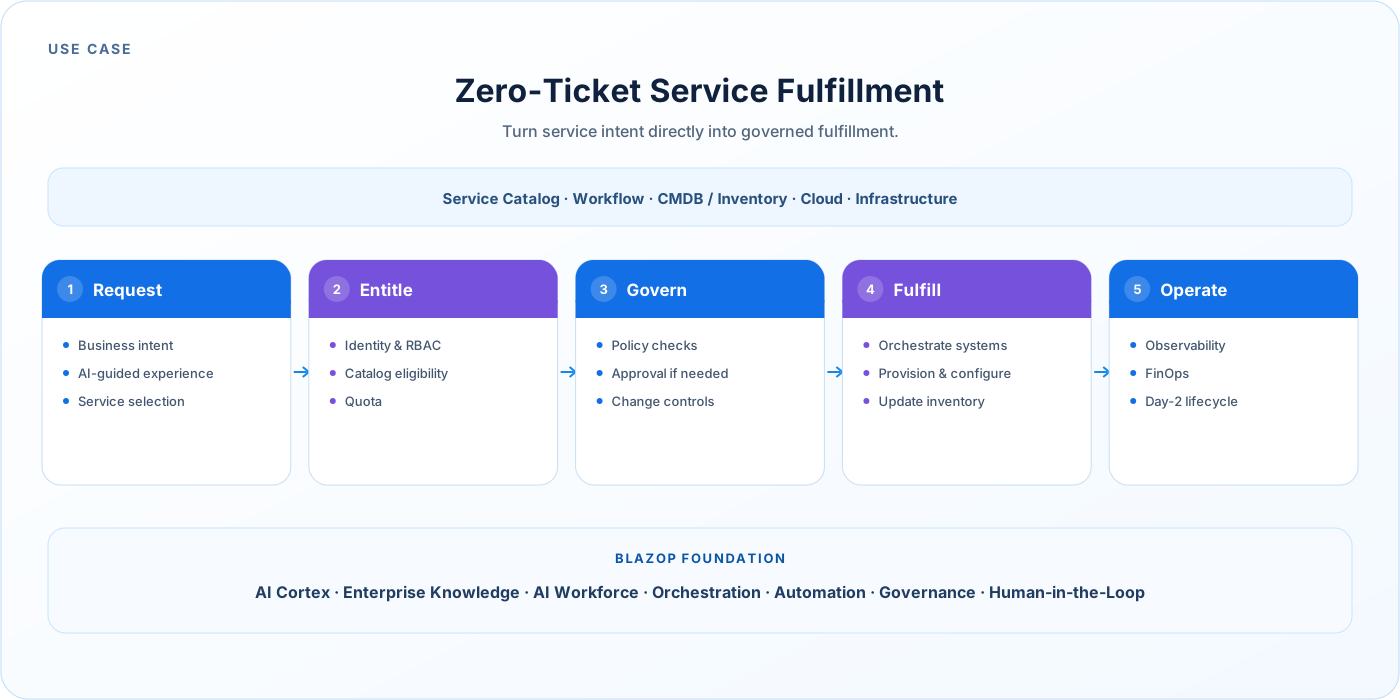
The infographic connects enterprise context, governance, AI reasoning and execution for this specific solution.
Routine infrastructure requests still travel through forms, tickets, approvals and multiple specialist teams. The delay is operational, not technical.
Translate a request into an executable workflow. The platform checks entitlement and policy, invokes approvals only when required, provisions the service and updates downstream operational systems.
The request itself becomes the workflow. Standard infrastructure can be fulfilled without an engineer manually moving a ticket from queue to queue.
The automation does not stop at provisioning. The resource enters inventory, observability, FinOps and lifecycle management immediately.
Turns user intent into a guided request that carries the context needed for policy checks, approvals and fulfillment.
Routes higher-risk actions through the right human approval while allowing low-risk work to continue automatically.
Packages approved infrastructure capabilities as repeatable service offerings with policy, entitlement and fulfillment attached.
Coordinates workflows across infrastructure and operational systems so multi-step services can execute as one governed process.
Executes approved provisioning steps across target platforms and returns status to the requesting workflow.
Maintains current infrastructure context so automation and operations can act on the right assets, owners and lifecycle state.
Start with the use case that matters now and expand into one autonomous operating model.
Turn infrastructure requests into governed workflows — not ticket queues. is a blaZop use case that applies AI reasoning, orchestration, automation and governance to move from an operational need or signal to a verified outcome.
A standalone script executes a predefined task. The blaZop operating model adds context, policy, approvals where needed, cross-system orchestration and outcome verification around the automation.
Yes. The autonomy model supports recommendation and human-approved action before teams choose conditional or fully autonomous execution for workflows that meet their risk and policy requirements.