The challenge
AI infrastructure combines scarce GPU capacity with complex networking, storage, Kubernetes and platform services. Provisioning is only the beginning.
Any entry point. One autonomous operating model.
Start with any entry point. Expand toward autonomous operations at your pace.
 AWS
AWS
 Azure — including Azure Local sovereign cloud
 Google Cloud
Manage the lifecycle from capacity and architecture through GPU cluster and workspace provisioning, observability, autonomous operations, usage attribution and GPU FinOps.
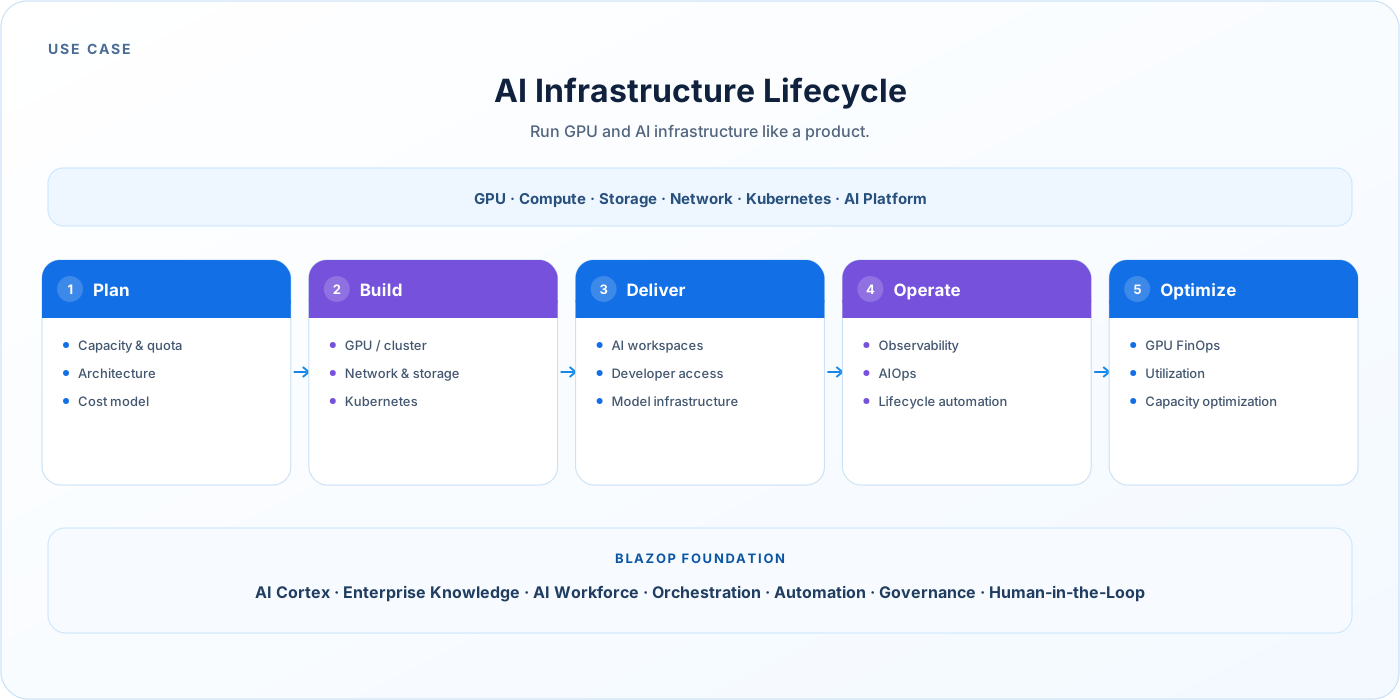
The infographic connects enterprise context, governance, AI reasoning and execution for this specific solution.
AI infrastructure combines scarce GPU capacity with complex networking, storage, Kubernetes and platform services. Provisioning is only the beginning.
Standardize AI infrastructure products and connect provisioning to the operational lifecycle through one control plane.
Build an internal AI Factory where teams consume approved GPU and AI environments through governed self-service.
Turn GPU capacity into multi-tenant B2B services with catalog, quota, isolation, metering, FinOps and autonomous operations.
Applies capacity visibility, entitlement and quota controls so scarce AI infrastructure can be allocated to approved teams, workloads and service tiers.
Encodes approved AI infrastructure patterns so teams can request repeatable environments without redesigning compute, network, storage and platform dependencies each time.
Orchestrates governed provisioning of GPU and cluster resources with the policies, dependencies and lifecycle steps required by the target environment.
Provides governed workspace patterns that connect authorized users to the compute, platform and supporting services required for AI development and operations.
Correlates operational signals with context and coordinates governed remediation to shorten repetitive incident work.
Connects usage, ownership and policy so teams can identify waste and take governed optimization actions.
Start with the use case that matters now and expand into one autonomous operating model.
Run AI infrastructure as a governed product, not a collection of GPU clusters. is a blaZop use case that applies AI reasoning, orchestration, automation and governance to move from an operational need or signal to a verified outcome.
A standalone script executes a predefined task. The blaZop operating model adds context, policy, approvals where needed, cross-system orchestration and outcome verification around the automation.
Yes. The autonomy model supports recommendation and human-approved action before teams choose conditional or fully autonomous execution for workflows that meet their risk and policy requirements.